
by Susan Riha
Before human arrival
Before the arrival of humans, large wildfires occurred in San Diego County once or twice a century from lightning strikes. As most lightning strikes occur in early summer, with rare occurrences near the coast and with increasing density toward the east, extensive burning was thought to occur only when summer ignited fires persisted in the eastern mountains until Santa Ana winds in the autumn brought the fires from the mountains toward the coast.
Kumeyaay
Humans arrived in what is now San Diego County between 12,000 to 15,000 years ago. Native people, including the Kumeyaay, used fire to encourage the growth of native grasses and forbs, whose seeds were an important part of their diet, as well as to create open foraging areas to attract prey. Their fires were small, frequent, and of low intensity.
At Blue Sky, the riparian habitat was likely burned every 1 to 5 years to enhance grass and forb production and to maintain trails. Understory vegetation in the oak woodland habitat was likely burned every 1 to 10 years for pest control, grass and forb promotion and to improve acorn access. In coastal sage scrub (CSS) on south facing, lower and mid slopes and mixed CSS and chamise slopes on the west side of the canyon, burning was likely every 5 to 15 years in a mosaic pattern. The goal was to increase edible annuals, attract small game and to prevent dense, mature shrub walls. There would be patchy openings rather than complete shrub removal. This rate of burning would be infrequent enough (>4 years) to prevent the permanent conversion of CSS to grassland but frequent enough to avoid the buildup of significant woody fuel that would make fires more intense. Chaparral was likely burned less frequently (20 to 50+ years) because shorter intervals reduced shrub vigor and these areas could be used for wood, browsing forage and hunting cover.
In the Spanish Mission Era (1769-1834), burning at Blue Sky likely decreased due to the declining population of indigenous people.
Ranchers
Areas in Poway show evidence of regular burning for ranching beginning in the 1850s. Ranchers used fire extensively in riparian, oak and CSS habitats to remove plant material unpalatable to cattle and sheep and create more open rangeland of non-native annual grasses. Ranchers had to burn every 3 to 10 years to maintain these grasses. The valley and lower slopes of Blue Sky were probably used for pasture.
In 1930s, laws were established in California that prohibited range burning. For Blue Sky, this resulted in many decades of fuel accumulation in riparian, oak and CSS habitats and the regrowth of plants species that rely on seeds rather than resprouting, such as California sagebrush (Artemisia californica).
Witch Creek Fire
In October 2007, the Witch Creek Fire burned through the entire Blue Sky canyon. Due to dryness and accumulation of fuel, the fire burned intensely, with areas of CSS and chaparral experiencing full canopy kill.Chaparral resprouted rapidly from root crowns and CSS was re-established both from seed and from stump sprouting. Many oaks exhibited basal sprouting, though canopy loss was high for some of the oak trees. Willows and sycamores quickly repopulated the riparian habitat. The south facing CSS slopes experienced partial vegetation type conversion, with non-native grasses invading. Blue Sky has younger and more diverse chaparral, greater CSS habitat (that was previously in old chaparral) and a healthy riparian corridor.
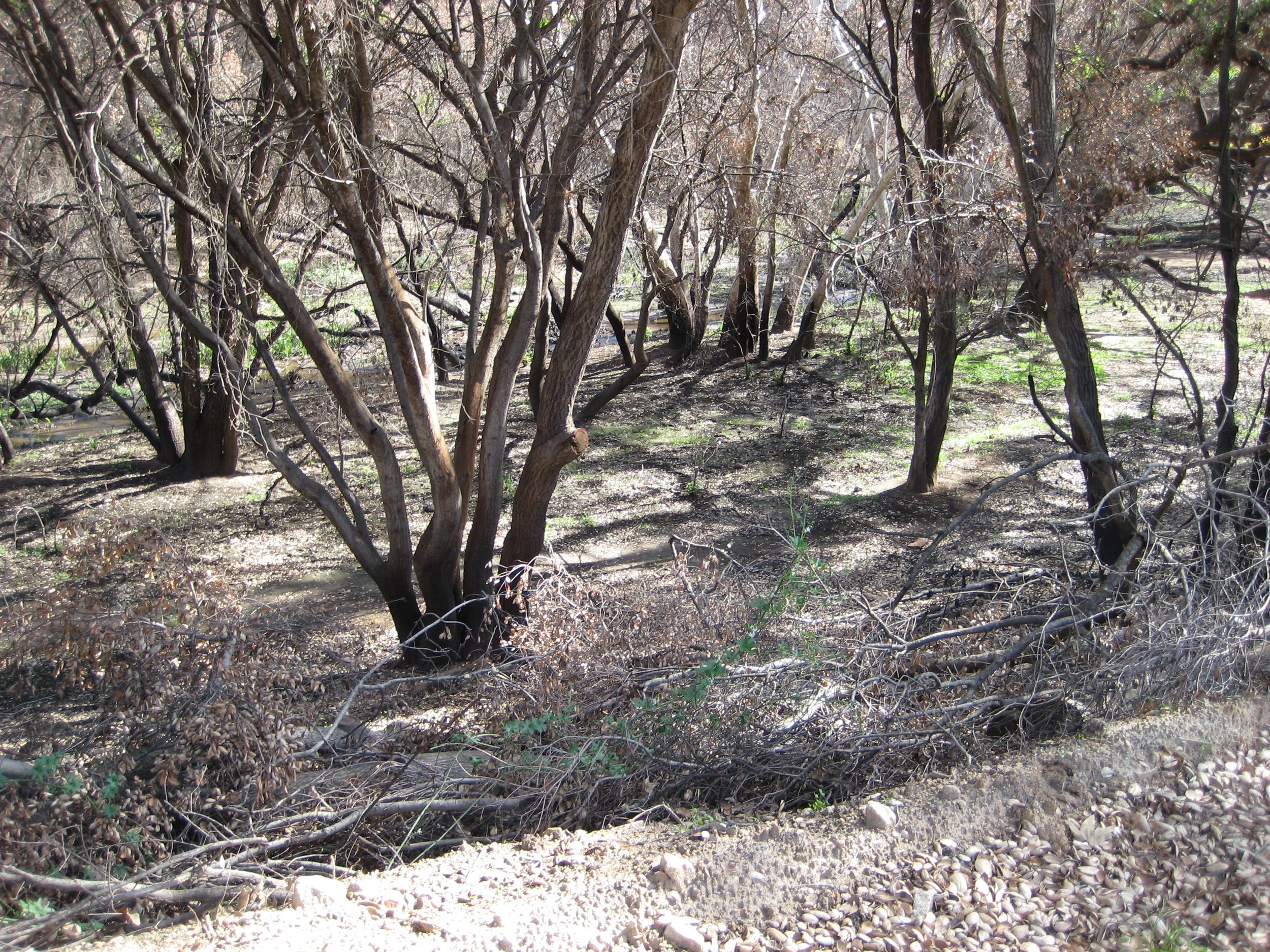
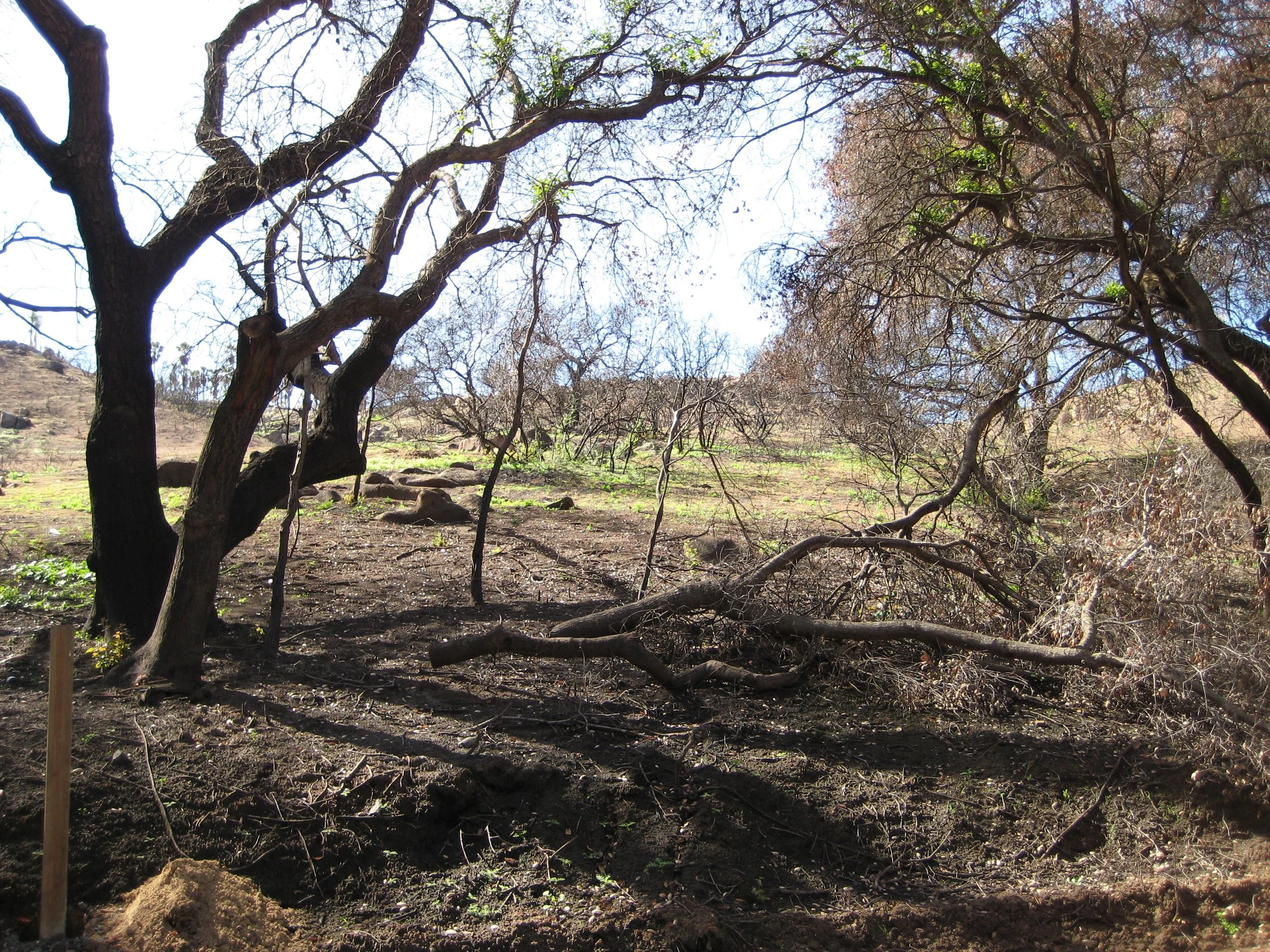
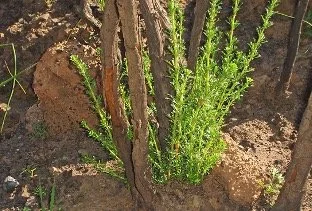
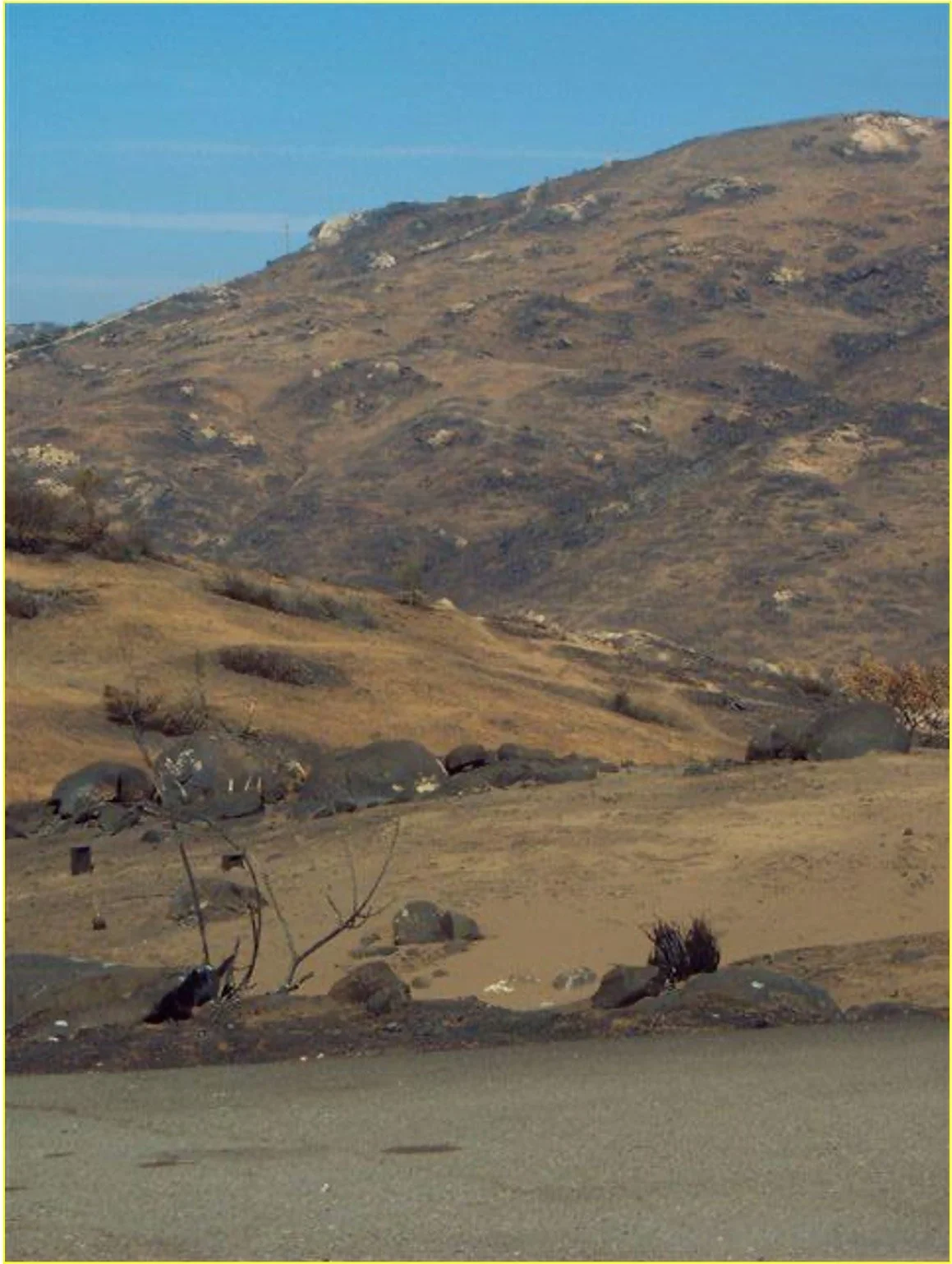
Pictures of Blue Sky after Witch Creek fire by Al Torretto
Climate Change
Large fires are likely to occur when Santa Ana winds (SAWs) occur before there are substantial rains at the end of the dry season. With climate change, models predict that SAWs will occur less frequently in all months, and particularly in September and October (-68% and -30%, respectively, in the second half of the century) but with far less reduction in November (-13%) and December (-11%). At the same time, higher year-to year variability in precipitation implies there will be a greater probability of very wet winters followed by extremely dry winters. This will likely shift the peak wildfire season from October toward December. Actual frequency of large fires in the future is hard to predict. Human causes of these fires may decrease (arcing power lines) or increase (more people in fire prone areas). Successful early control of fires should help somewhat in decreasing large fires. However, fires occurring more frequently (<20 years), could lead to changes in Blue Sky vegetation. These include loss of coast live oaks, and loss of CSS habitat due to conversion to non-native grasses.