
by Alan Torretto
One morning many years ago, I headed out to my back patio to feed our cat. When I looked out I was surprised to see this cute little gray fox waiting at the cat’s bowl for food. She probably detected the smell of “meat/flesh” in the bowl. I thought “how cool. There’s a wild mammal carnivore right in my back yard!”
Latin = caro = meat or flesh vorare = to devour
The technical term for mammals in the order Carnivora is carnivoran, and they are so-named because most member species in the group have a carnivorous diet, but the similarity of the name of the order and the name of the diet causes confusion. Many, but not all carnivorans, are meat eaters. A few, such as the large and small cats (Felidae) are obligate carnivores whose diet requires nutrients found only in animal flesh. Other families of carnivore are highly variable, for example the Ursidae (bears). While the Arctic polar bear eats meat almost exclusively (more than 90% of its diet is meat), almost all other bear species are omnivorous, and one species, the giant panda, is almost exclusively herbivorous.
Key Characteristics of the Order Carnivora
Carnivore teeth are highly specialized for hunting and consuming meat. Long, sharp, conical canines are used for grabbing and puncturing, and sharp incisors for tearing. A key feature is the carnassial pair (upper fourth premolar and lower first molar), which acts like scissors to slice through tough muscle and skin.
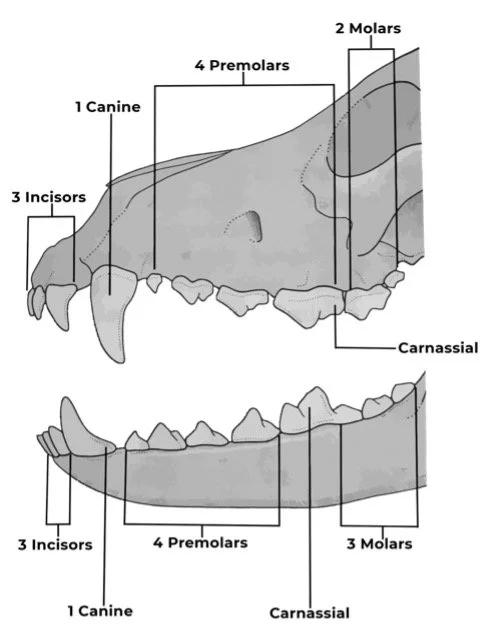
Canines: Long, dagger-like teeth used for killing, often by breaking the spinal cord or severing arteries.
Carnassials: Specialized, blade-like molars and premolars designed for shearing meat rather than grinding.
Incisors: Small, sharp teeth at the front used for nipping and scraping meat off bones.
Supported by large temporalis muscles and often a sagittal crest (ridge on the skull) for powerful biting.
Unlike herbivores, true carnivores have few, if any, flat grinding molars and lack the ability to chew sideways, instead using vertical, scissor-like movements.
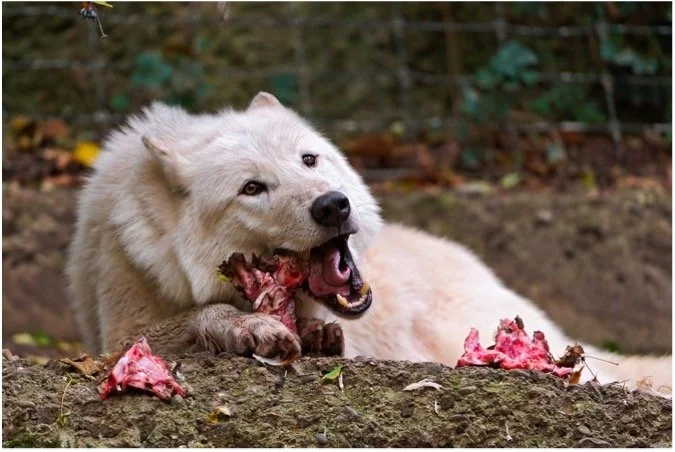
A wolf using carnassial teeth to shear meat from bone.
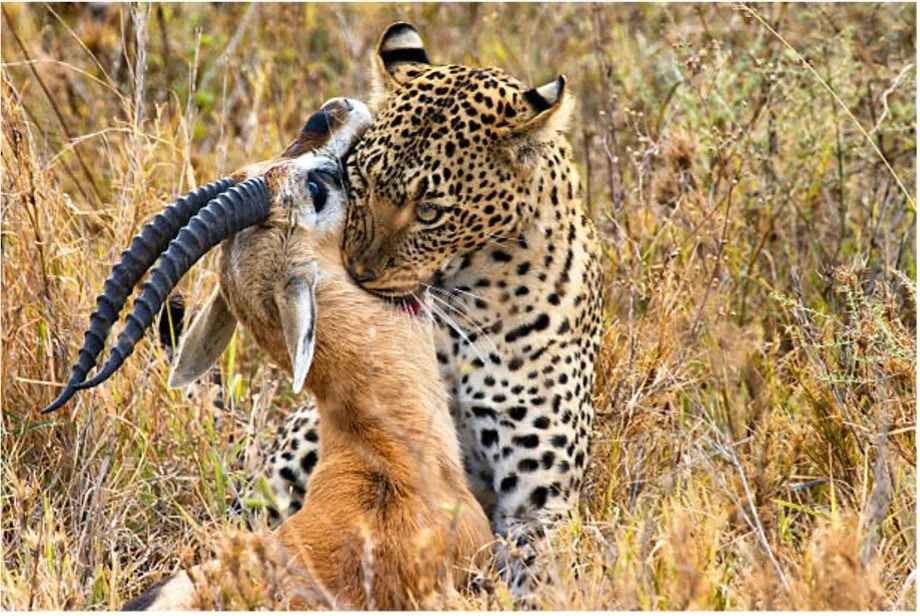
A leopard using canine teeth to dispatch prey.
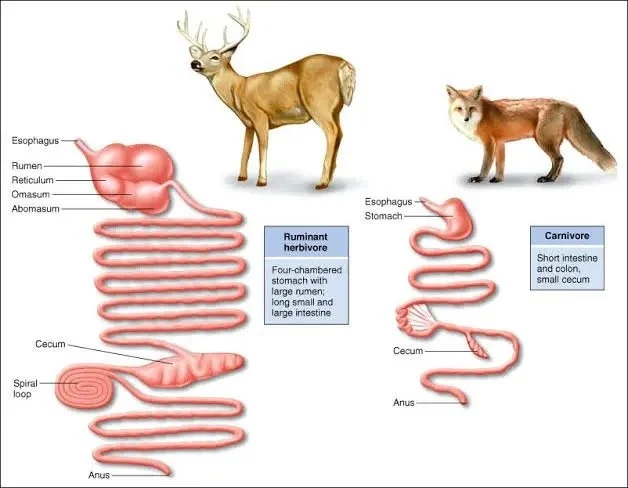
Carnivores have a very different digestive system compared to herbivores.
Mammal Carnivores of Blue Sky
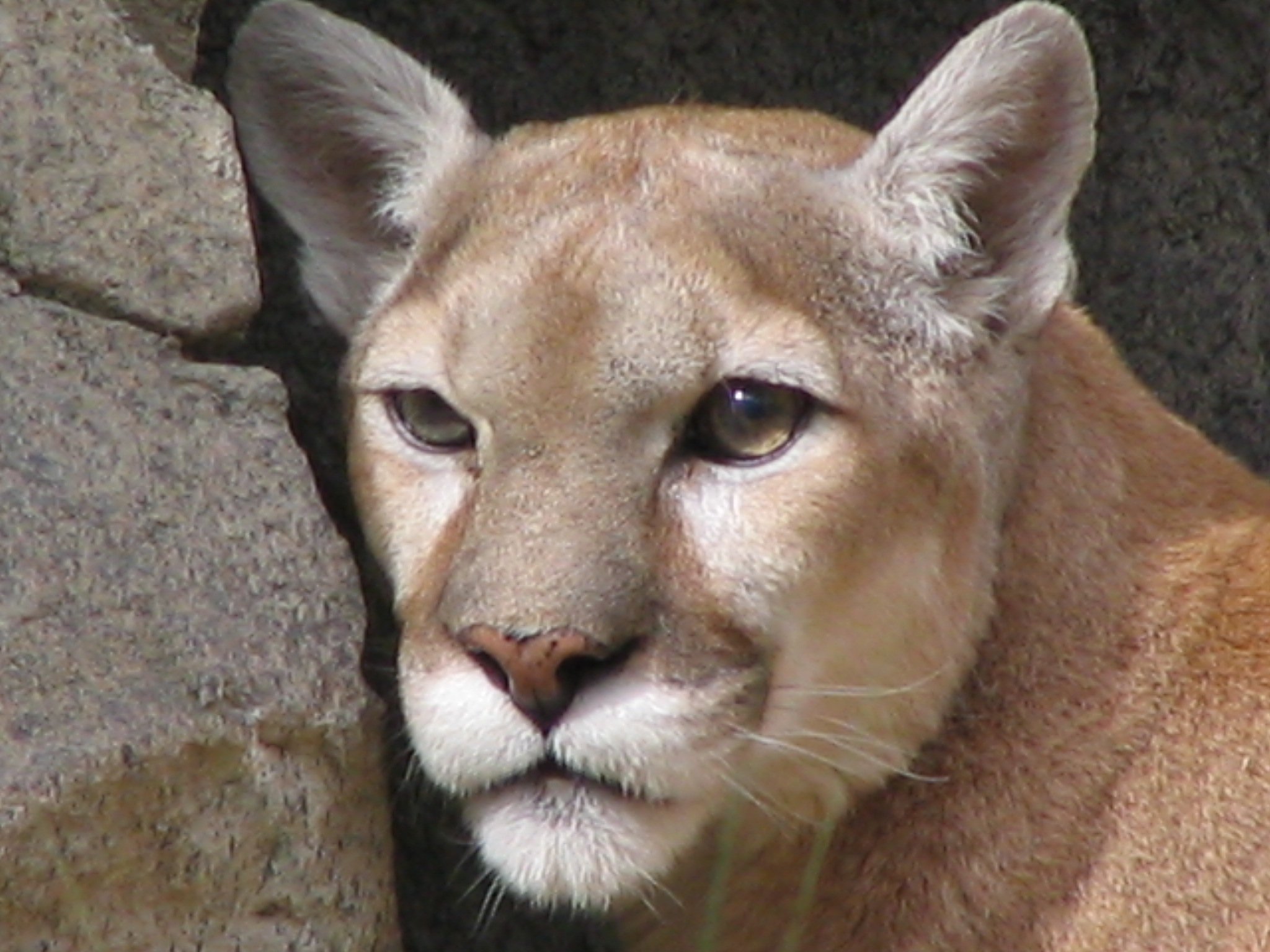
Mountain Lion
Largest of Blue Sky’s carnivores. They use the reserve not only to hunt prey, but also as a “wildlife corridor” to access other wild areas adjacent to it. A true carnivore, in every sense, they eat mule deer (their main prey), raccoons, opossums, rabbits and rodents.
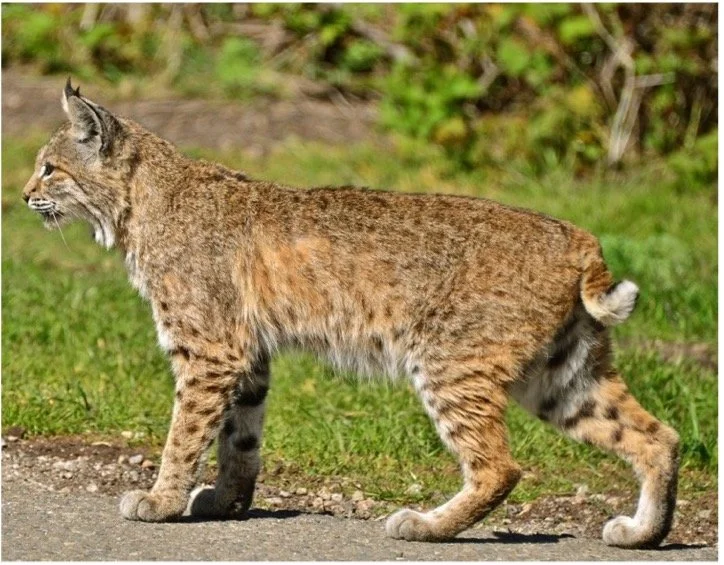
Bobcat
Just like all members of the cat family. bobcats are total “meat eaters”. Their prey includes rabbits, woodrats, ground squirrels, birds and sometimes small deer. A great jumper, they can capture birds as they take off to fly away. Like most cats, the bobcat is territorial and largely solitary, only getting together during mating.
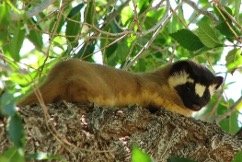
Long-Tailed Weasel
A “Mighty Hunter” capable of bringing down prey much larger than themselves, such as rabbits and nesting ducks. Smaller animals like mice, voles, gophers, and snakes can be hunted above ground or underground in their tunnels and burrows. Small birds are also on the menu. Only in the southwestern part of the U.S. do they have the facial mask.
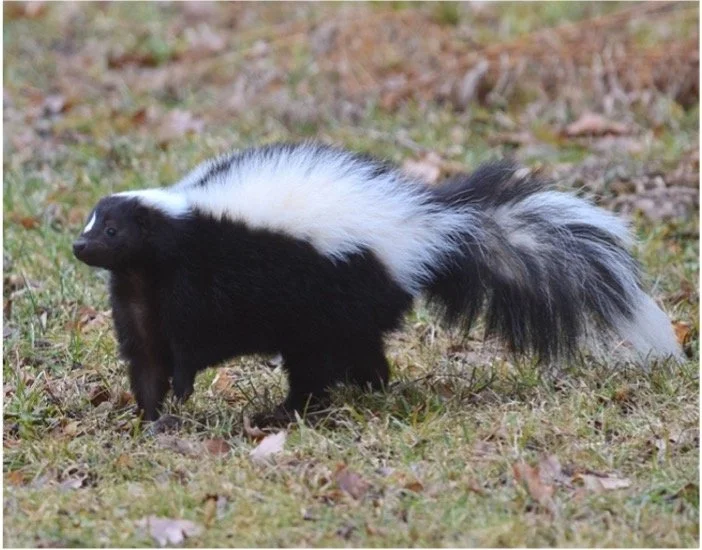
Striped Skunk
Despite its passive nature, they are well known for their defensive behavior. They can spray their musk up to 19.5 ft. 90% of their diet is insects, worms, other small arthropods and eggs of ground nesting birds. Wild fruits, like berries, make up the remainder of their diet. Great Horned Owls are one of the few predators that can successfully hunt skunks.
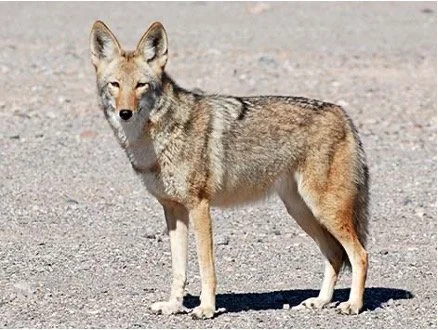
Coyote
Coyotes are extremely adaptable and use a wide range of habitats from Alaska to Panama. They will hunt as individuals or in packs. Their prey are deer, rabbits, woodrats, mice, snakes and even birds like road runners.
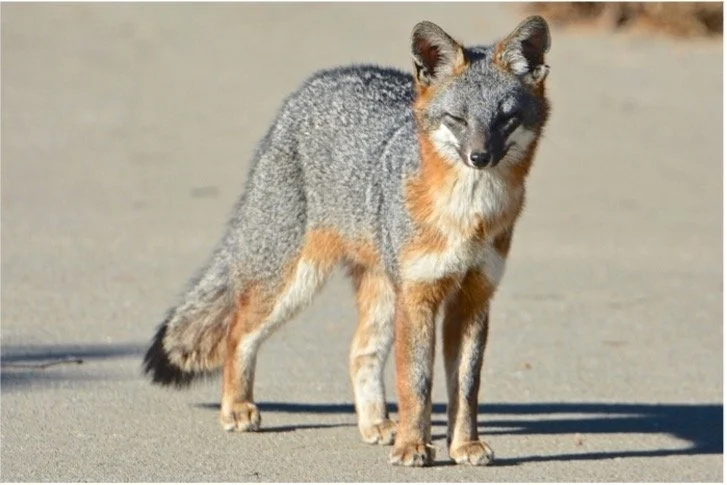
Gray Fox
In my opinion, one of the “cutest” animals in Blue Sky. Their population in the reserve seems to be increasing. Their diet is wide ranging, including cottontails, voles, shrews, birds, grasshoppers, and fruits. Gray Foxes are the only member of the Canidae (dog) family that can climb trees.
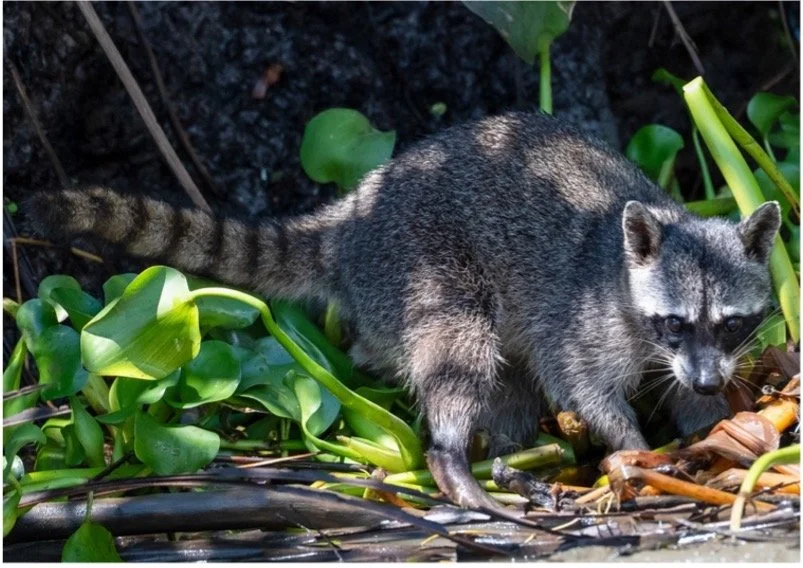
Raccoons
Usually nocturnal in their foraging, they are highly intelligent, with the highest brain to body weight ratio of all members of the order Carnivora. Although in the order Carnivora, they are truly omnivores in their diet, dining on worms, insects, amphibians, reptile and bird eggs, nuts, fruit, acorns, and other vegetation.
The Ecological Importance of Predation by Carnivores
Vital for ecosystem health because they maintain balance through top-down regulation, preventing herbivore overpopulation and protecting vegetation from overgrazing.
Enhance biodiversity by reducing competition among prey, and strengthening gene pools by removing weak and sick individuals.
Provide food for other species of organisms via the carcasses of their prey, including scavengers (vultures, ravens, carrion beetles) and decomposers (bacteria, fungi).
Contribute,via decomposition of prey carcasses, to recycling nutrients to soil that support plant growth .
Without predators, ecosystems experience a reduction in biodiversity and a degradation of habitat structure.